

The Appliance
Vulnerability Map:
Protecting the High-Risk Zones
Most catastrophic home floods don't start at the main line. They start behind the fridge, under the dishwasher, or at the base of a corroding water heater — while you're asleep or on vacation.
Where Floods Actually Start
The Insurance Institute for Business & Home Safety puts plumbing supply system failures as the leading source of residential water loss, averaging about $5,092 per incident after the deductible. Toilet failures average $5,584 and water heater failures $4,444. The main water line is rarely the culprit. The real threats are the aging components hidden behind and beneath your everyday appliances.
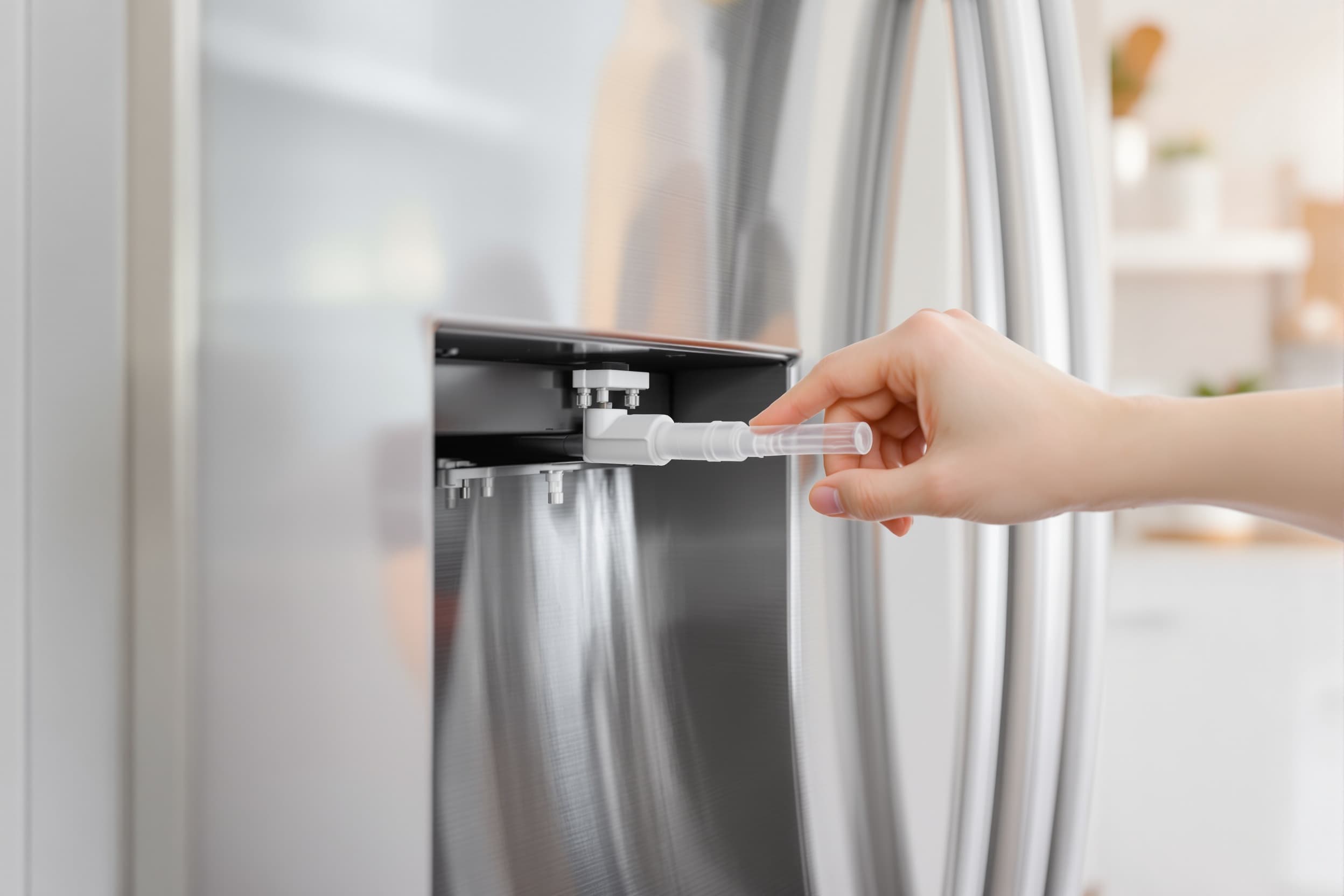
Refrigerator
The plastic ice maker supply line embrittles with age. Temperature cycling causes micro-fractures that eventually rupture under 60–80 PSI household pressure.
The solenoid valve that controls water flow to the ice maker can stick open, causing a continuous slow drip that saturates the subfloor over weeks without visible signs.
The defrost drain pan beneath the unit collects condensation. A blocked drain line causes overflow — often mistaken for a plumbing issue.
Remote sensing disc + 4-foot cable — place the alarm unit on the counter while the sensor tucks behind the unit.
Cable Sensor vs. Puck Sensor: Why It Matters
Not all sensors are equal for all applications. The geometry of the appliance determines which sensor type provides reliable coverage — and choosing the wrong type means a leak can go undetected for days.
Sensing Cable
A flexible cable with distributed moisture-detection nodes wraps around the full perimeter of the appliance base. Any point along the cable that contacts water triggers the alarm.
A water heater can leak from any point on its 360° base circumference. A single puck sensor only detects water that reaches the few inches around it — most of the perimeter stays unmonitored.
- 360° perimeter coverage
- Detects leaks at any point along cable
- Ideal for cylindrical appliances
- Acoustic Cable Sensing technology
Puck Sensor
A compact disc-shaped sensor with two metal contact points on the underside. When water bridges the contacts, the circuit completes and triggers the alarm.
Dishwashers and under-sink areas have a defined, small leak zone. A puck sensor placed directly in the leak path provides immediate detection without the complexity of cable routing.
- Ultra-low profile (fits 2" clearance)
- Simple placement — no routing required
- Lower cost per sensor
- Ideal for defined leak zones
Audio Alarm vs. WiFi vs. Cellular: Choosing by Zone
The right monitoring technology depends on where the sensor is deployed and whether you'll be present when a leak occurs. A 100dB siren is useless in a basement you visit once a month.
You're nearby but not always present. WiFi push notifications catch leaks when you're in another room or out for a few hours.
These are "silent" zones you may not visit for days. Remote alerts are mandatory — a local siren in an unoccupied basement is functionally useless.
No internet connection can be assumed. Cellular sensors with SIM cards provide independent alerting regardless of router status.
The Basement's Last Line of Defense
During US storm seasons, a sump pump failure is the single most common cause of basement flooding. The pump itself rarely fails catastrophically — it's the high-water condition that goes undetected when the pump is overwhelmed or loses power.
A high-water alarm sensor positioned 2 inches above the pump's activation level provides a critical warning window: the pump is running but losing ground. This is your signal to call a plumber or activate a backup pump before the pit overflows.
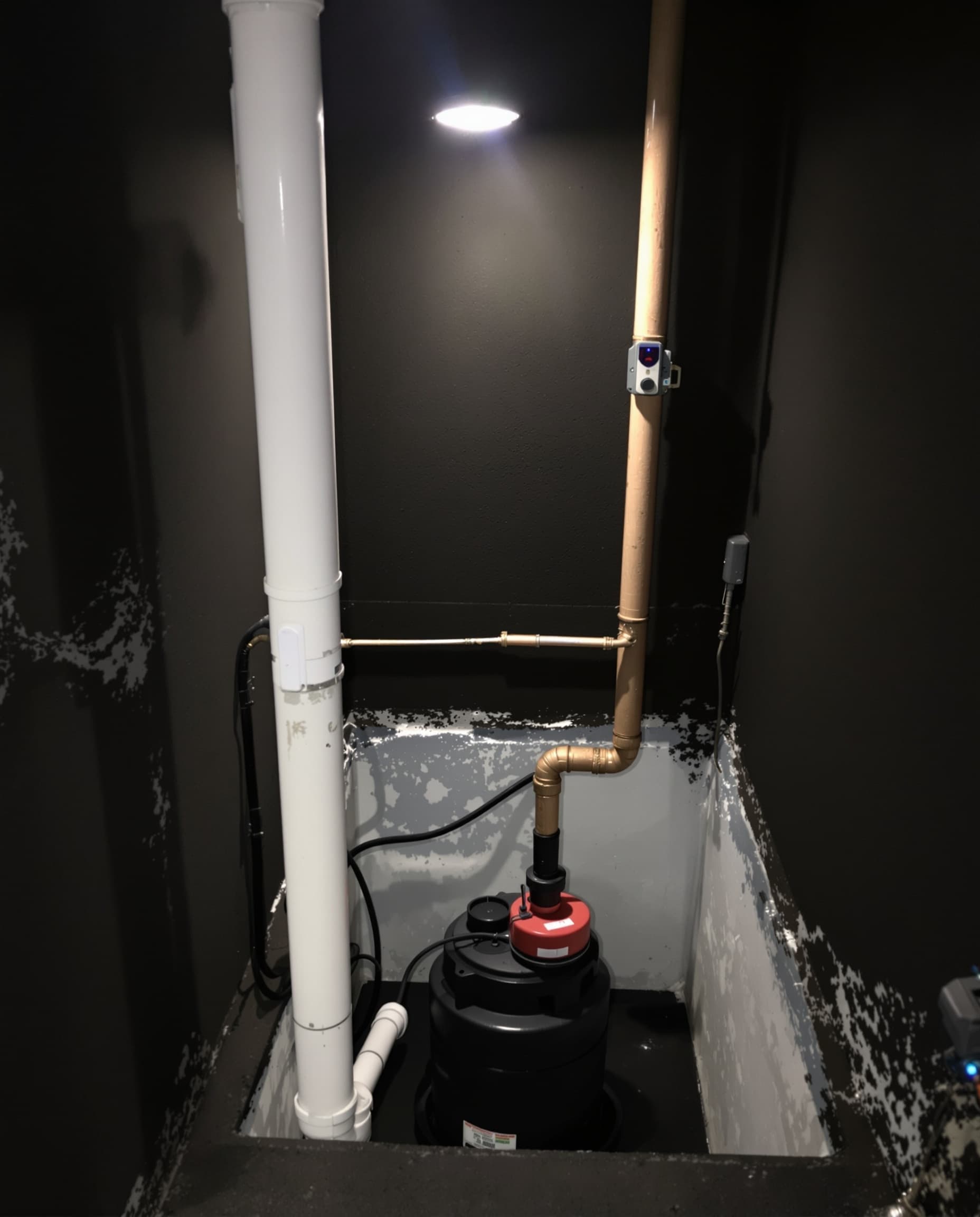
The YoLink Water Leak Sensor's LoRa protocol maintains a reliable connection from deep basement sump pits through walls and floors better than WiFi — where standard WiFi sensors lose signal entirely. It can also trigger a YoLink-compatible backup pump relay automatically.
LeakCheckPro Recommended Sensors
Evaluated specifically for appliance-zone deployment.
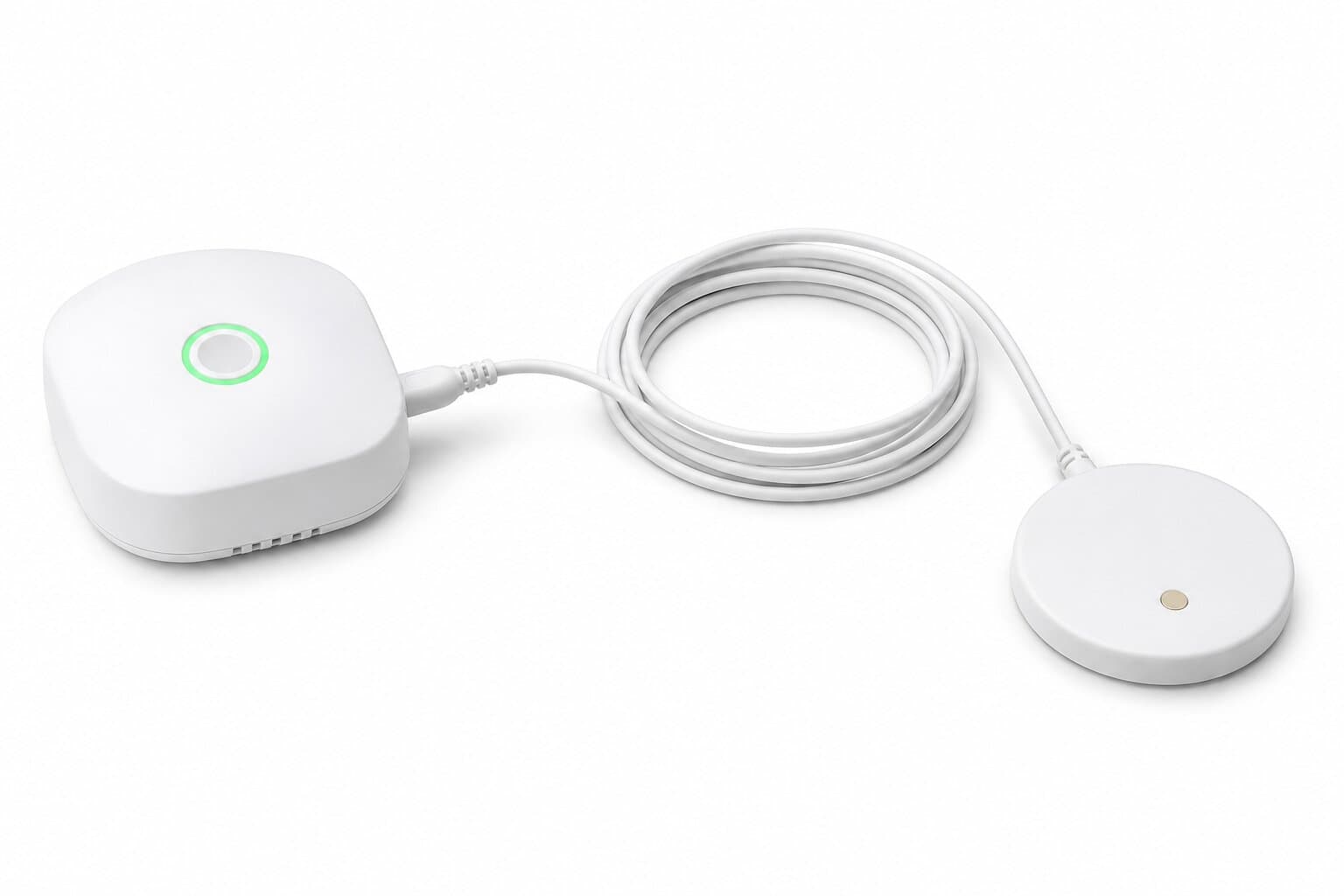
Flo by Moen Smart Water Detector
Place the main alarm unit where you can hear it, while the sensor disc tucks deep behind a refrigerator or washing machine — solving the access problem of standard puck sensors.
- Remote sensing disc + 4-foot extension cable
- Place alarm unit audibly, sensor tucked behind appliance
- Humidity & temperature sensing built-in
- WiFi direct — no hub required
- Integrates with Moen Flo ecosystem
- LED status ring: green (clear), red (alert)
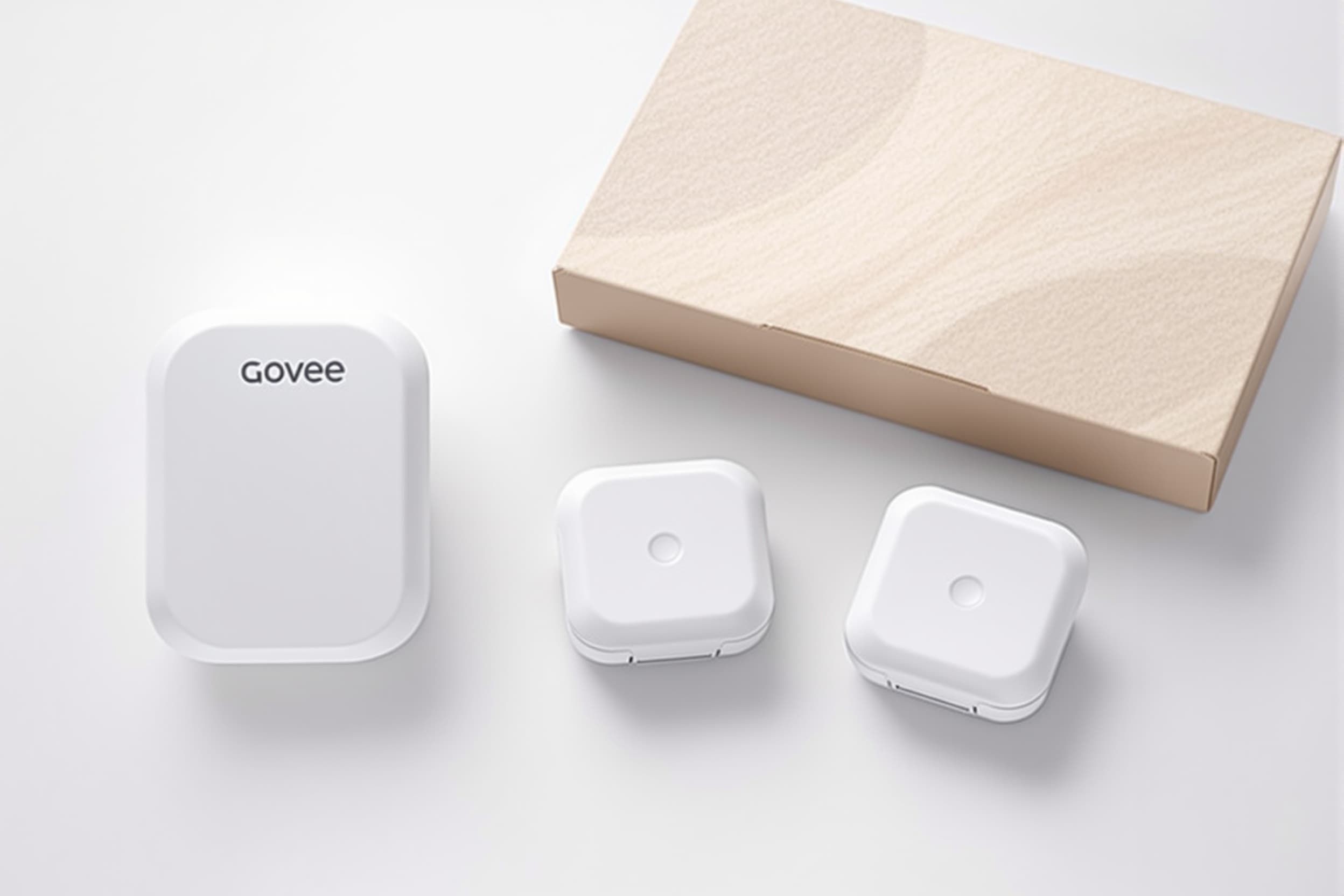
Govee WiFi Water Sensor 3-Pack
Combines a loud local alarm with instant smartphone notification — ideal for kitchen and laundry areas where you need both immediate audible warning and remote awareness.
- 100dB siren — audible from two floors away
- Immediate phone push notifications via WiFi
- 3-pack covers kitchen + laundry + basement
- No hub required — direct WiFi connection
- App-based alert history and battery status
- 2-year battery life per sensor
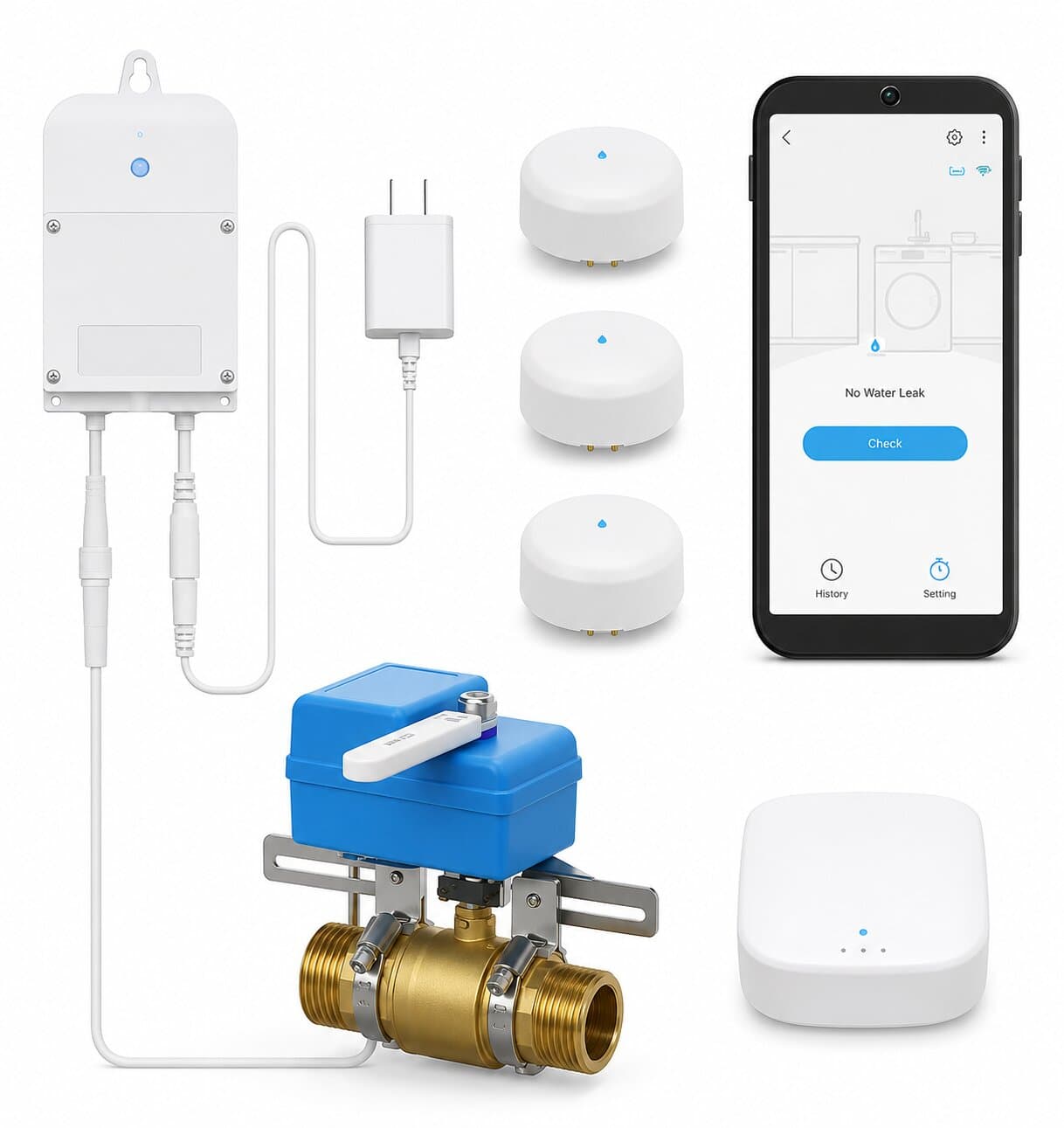
YoLink Smart Water Starter Kit
Maintains a reliable connection from deep basement sump pits and concrete mechanical rooms where standard WiFi sensors lose signal entirely.
- LoRa technology: 1/4-mile open-air range — far better wall penetration than WiFi
- Signal penetrates thick basement walls reliably
- Integrates with sump pump backup systems
- 300+ devices per hub
- Works without WiFi — dedicated 915MHz band
- Alexa, Google Home, IFTTT compatible
The 5-Minute Quarterly Appliance Audit
Most appliance failures are preventable. This checklist takes under 5 minutes per appliance and should be performed every 90 days — set a calendar reminder for January, April, July, and October.
- Pull unit 6 inches from wall — inspect Polyethylene Tubing for kinks or discoloration
- Check ice maker connection fitting for mineral deposits or moisture
- Inspect drain pan beneath unit — empty if water present
- Verify sensor disc is still positioned at the base
LeakCheckPro Pro Tip
Before any vacation longer than 3 days, perform this full audit and verify all sensors are online in their respective apps. The highest-risk scenario for appliance flooding is an unoccupied home — particularly for water heaters, where T&P Relief Valve failures and tank corrosion events go undetected for the entire duration of your absence.
Frequently asked questions
Refrigerator ice-maker lines are a persistent source of appliance water damage, primarily because of Polyethylene tubing (ice maker supply lines), which embrittles and cracks with age. Dishwashers, water heaters and washing machines follow — and per IBHS it is water heater and washing-machine failures that carry the highest average cost per claim. Washing machines cause the most severe individual damage events, because a supply hose failure dumps water at full mains flow with nothing throttling it.
A standard puck sensor covers only a 3-inch detection radius. A water heater can leak from any point on its 360-degree base circumference. A sensing cable using Acoustic Cable Sensing technology wraps around the full perimeter of the tank base, detecting leaks from any point along its length. This provides complete coverage that a puck sensor physically cannot achieve.
Key warning signs include: rust-colored water from hot taps (indicating internal tank corrosion), a popping or rumbling sound during heating (sediment buildup), moisture or rust staining around the T&P Relief Valve discharge pipe, and tank age over 10 years. The T&P Relief Valve weeping (dripping) is a critical warning — it indicates the valve is activating due to excess pressure, which can precede tank failure.
The YoLink Smart Water Starter Kit is the best choice for sump pump monitoring because its LoRa technology maintains a reliable connection from deep basement sump pits through walls and floors better than WiFi — where standard WiFi sensors lose signal entirely. Position the sensor 2 inches above the pump's normal activation level to get a warning before the pit overflows.
Perform a full Wet Test quarterly — every 90 days. Use a damp paper towel pressed against the sensor contacts for 3 seconds. Verify the alert arrives on your phone within 30 seconds. Replace any sensor that fails to alert. Also replace batteries in basement sensors annually regardless of reported battery level, as cold temperatures cause Voltage Drop that degrades performance before the app reports low battery.
Know Your Home's Vulnerability Score
Use our 60-second Risk Audit to identify which appliance zones in your home are currently unprotected.
Related Research
Sources & References
- 1Insurance Institute for Business & Home Safety (IBHS) · accessed 2026
Plumbing supply system failures are the leading source of residential water loss. Average cost per incident after the deductible: about $5,092 for a supply system failure, $5,584 for a toilet failure, $4,444 for a water heater failure. Note: the widely quoted '65%' figure refers to the share of plumbing supply failures caused by supply-material damage — NOT to the share of home floods caused by appliances.
- 2Insurance Information Institute (Triple-I), from ISO data · 2018–2022 accident years
Source for the average water damage and freezing claim ($13,954) and for water damage's share of all homeowners claims.
- 3Moen (solutions.moen.com) · accessed 2026
Moen's own figures: the Flo detects leaks as small as ONE DROP PER MINUTE (FloSense monitors pressure 'down to one drop per minute') — not a GPM threshold. Household fixtures and pipes are built for pressure 'typically between 60-80 psi'; the Uniform Plumbing Code requires a pressure-reducing valve above 80 psi. The Flo itself is certified not to exceed a 1 psi drop at 6 GPM and is rated to a maximum continuous 80 psi.
- 4Bob Vila, This Old House, Family Handyman and plumbing contractors, consistent across sources · accessed 2026
Sacrificial anode rods deplete in roughly 3-5 years, varying with water hardness and hot-water usage — not 8-12. A maintained water heater typically lasts 15-20 years; without anode replacement the tank may rust out before it reaches 10. This is the single maintenance task that most changes a water heater's lifespan.
Figures on this page are quoted from the sources above. Where a number is widely repeated online but could not be traced to a primary source, it is not published here. Found something wrong? Tell us and we will correct it.