
Phyn Plus Review:
Is AI-Powered Pressure Analysis
the Ultimate Leak Defense?
Most systems watch water move. The Phyn Plus listens to your plumbing's pulse — sampling pressure 240 times per second to detect anomalies that no sensor on the floor could ever find.
The most analytically sophisticated residential water protection system available. High-Definition Pressure Wave Analysis at 240 readings/sec and the Badger Meter Ultrasonic Flow Sensor represent a genuine step above consumer-grade alternatives. Best for tech-focused homeowners who want AI-powered plumbing intelligence and fixture-level analytics.
Who the Phyn Plus is for — and who should skip it
It supports no floor sensors whatsoever. Phyn watches the water in the pipes and nothing else — a washing machine hose bursting onto the laundry floor is invisible to it until the flow anomaly registers.
Buy it if
- Detection accuracy is the thing you care about most. It scores highest of the three on that component, and it is the only one with an independent third-party comparison behind it.
- You want the nightly plumbing check — the valve closes briefly each night to find pinhole leaks that normal use would mask.
- You refuse to pay a subscription. Full functionality, including the analytics, needs none.
- Your plumbing suits a DIY fit. It has 1" NPSM threads; Phyn recommends checking with a plumber first, but many installs do not need one.
Skip it if
- You want floor-level coverage under sinks and behind appliances. It does not support sensors at all.
- You will miss a push notification. There are no phone-call alerts, and reviewers repeatedly note that texts and pushes get ignored.
- You want it working out of the box. It takes roughly a thousand water events — two to three weeks — to learn your household, with false alarms in that window.
- Your internet is unreliable. It is WiFi and cloud dependent with no floor sensors to fall back on.
These are drawn from manufacturer documentation and published independent comparisons. This site does not physically test products — see how we research.
Not sure which system is right for you? See the full head-to-head comparison — Moen Flo vs. YoLink vs. Phyn Plus.
Phyn Plus (2nd Gen)
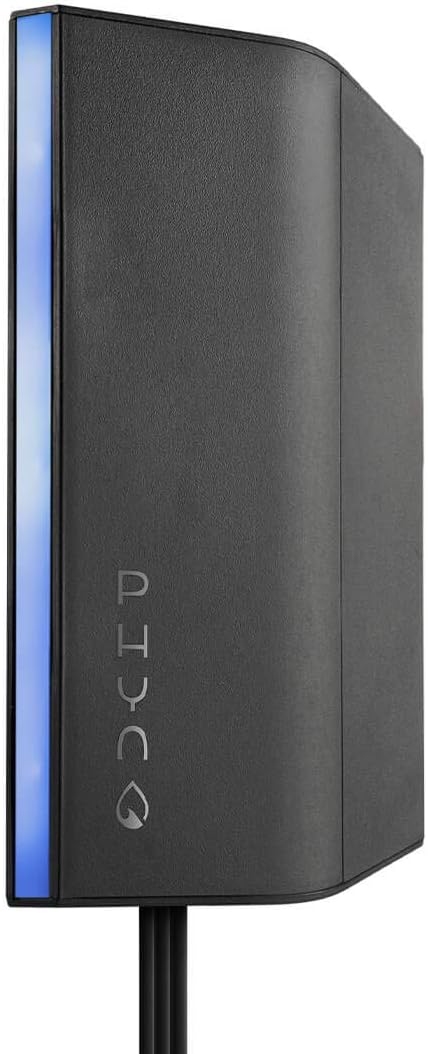
Affiliate link — we earn a commission at no extra cost to you. Full disclosure
The Science of Pressure Waves: 240 Readings Per Second
Every time water moves through your plumbing, it creates a pressure wave. The Phyn Plus captures and analyzes these waves with a resolution that no competing consumer device can match.
The Phyn Plus samples water pressure 240 times every second. A standard flow monitor samples once every few seconds. This 240x resolution advantage is what enables detection of micro-anomalies.
The system samples pressure 240 times a second, which is what lets it register the pressure signature caused by a slow drip from a pinhole crack inside a wall cavity.
The Badger Meter Ultrasonic Flow Sensor has no moving parts. No turbine to wear out, no impeller to clog. Industrial-grade durability rated for over a decade of continuous operation.
What Different Pressure Signatures Look Like

The Badger Meter Ultrasonic Flow Sensor: Industrial Grade in Your Home
Phyn partnered with Badger Meter — a company that supplies flow measurement technology to US municipal water utilities — to build the sensing core of the Phyn Plus. This is not a consumer-grade component repurposed for smart home use. It is the same class of sensor used to measure water flow in city infrastructure.
No Moving Parts
Turbine-based flow meters have an impeller that spins with water flow. Over time, mineral deposits, debris, and mechanical wear degrade accuracy. The Badger Meter ultrasonic sensor uses sound waves — nothing moves, nothing wears out.
Bidirectional Measurement
The sensor measures flow in both directions simultaneously. This allows it to detect backflow events — a sign of pressure anomalies or cross-contamination — that single-direction sensors would miss entirely.
Temperature Compensation
Water viscosity changes with temperature, which affects flow measurement accuracy. The Badger Meter sensor automatically compensates for temperature variations, maintaining accuracy across the full range of residential water temperatures.
Fingerprinting Fixtures: The AI That Knows Your Plumbing
During the first 7–14 days after installation, Phyn Plus enters a learning phase. Every water event in your home creates a unique pressure wave signature. The AI catalogs these signatures — building a precise map of your plumbing's normal behavior. This is Fingerprinting Fixtures.
What Gets Fingerprinted
After Fingerprinting: The Auto-Shutoff Algorithm
Once the AI has fingerprinted your fixtures, the Auto-Shutoff Algorithm activates. Any water event that doesn't match a known fixture signature — or that matches a known signature but runs for an abnormal duration — triggers a graduated response:
The Fingerprinting Fixtures system is what separates Phyn Plus from every other flow-based monitor. Competitors detect anomalies against a generic baseline. Phyn detects anomalies against your specific home's baseline — dramatically reducing false alarms while increasing sensitivity to real threats.
One Phyn Plus vs. 20 Puck Sensors: The Architecture Decision
This is the central question for any homeowner evaluating Phyn Plus. The answer depends on what kind of leaks you're most concerned about.
Phyn Plus Advantages
- Detects leaks inside walls and under slabs
- Single device — no placement strategy needed
- Monitors entire system simultaneously
- Auto-shutoff on any anomaly, anywhere
- Cannot pinpoint which room has the leak
- Higher upfront cost
20 Puck Sensors Advantages
- Exact leak location identified
- Lower per-sensor cost
- No pipe cutting required
- Cannot detect leaks inside walls
- Requires sensors at every potential point
- No coverage for pipes between sensors
- WiFi dead zones leave gaps in coverage
Our Verdict: When to Choose Phyn Plus
Choose Phyn Plus if your primary concern is leaks inside walls, under slabs, or in pipes you can't see. The High-Definition Pressure Wave Analysis and Fingerprinting Fixtures AI give it a detection capability that no sensor array can replicate. Choose a sensor array if you want exact room-level location data and are comfortable with the coverage gaps that come with point-of-leak detection.
Smart Home Integration & Matter Compatibility
The Phyn Plus integrates natively with Alexa and Google Assistant, and is on the roadmap for full Matter compatibility via a bridge adapter — making it a future-proof choice for unified smart home control.
Voice control, status queries, alert announcements
Voice commands, routine integration, status reports
Bridge adapter enables Apple Home, SmartThings integration
Full HomeKit automation via Matter bridge adapter
Custom automation triggers and applets
Voice Control Capabilities
A 2019 study commissioned by the Southern Nevada Water Authority and conducted by Utah State University compared five whole-home leak detection systems — including units from Moen, Buoy, StreamLabs and Flume — and found the Phyn Plus the most reliably accurate across multiple flow thresholds. Phyn cites the same study on its own product page.
Two caveats worth knowing. The study is from 2019 and predates the 2nd-generation hardware reviewed here. And a specific accuracy percentage is widely quoted online alongside this study — we could not trace that figure to the study itself, so we do not repeat it.
Phyn Plus does not carry native Matter support. Integration with Apple Home and Samsung SmartThings runs through a bridge adapter rather than the Matter radio itself. Phyn has not published a dated commitment to native Matter, so treat any timeline you see quoted elsewhere as speculation.
Pros & Cons: The Unbiased View
What We Love
- High-Definition Pressure Wave Analysis — 240 pressure readings per second
- Badger Meter Ultrasonic Flow Sensor — no moving parts, 10+ year durability
- Fingerprinting Fixtures — AI learns every appliance's unique water signature
- Auto-Shutoff Algorithm triggers in seconds on confirmed anomaly
- Single device covers entire plumbing system — no sensor placement required
- 2nd Gen is smaller and more energy-efficient than the original
- DIY-installable — no plumber required for most installations
- Alexa and Google Assistant voice integration
Limitations to Know
- WiFi-dependent — no offline fallback like D2D Pairing
- Requires professional installation for some pipe configurations
- Higher price point than sensor-only systems
- Matter support currently via bridge only (not native)
- Less granular location data than point-of-leak sensor arrays
Who the Phyn Plus Is Built For
Tech-Focused Homeowners
You want deep analytics, AI-powered intelligence, and the most sophisticated detection technology available for residential use.
Older Home Owners
Older plumbing is more prone to pinhole leaks inside walls. Phyn's pressure wave analysis catches these before they become mold or structural damage.
Data-Driven Users
You want to understand your home's water usage at the fixture level — tracking consumption, detecting inefficiencies, and optimizing utility costs.
Frequently Asked Questions
High-Definition Pressure Wave Analysis is Phyn's core detection technology. The system samples water pressure 240 times per second — far more frequently than any competing device. Every time a fixture opens or closes, it creates a unique pressure wave pattern in the plumbing system. Phyn's AI maps these patterns and learns to distinguish between a dishwasher filling (gradual, predictable pressure drop) and a pinhole leak behind a wall (continuous, low-level pressure loss). When an anomaly is detected, the Auto-Shutoff Algorithm closes the main valve within seconds.
The Badger Meter Ultrasonic Flow Sensor is an industrial-grade measurement component used in municipal water infrastructure. Unlike turbine-based flow meters (which have spinning parts that wear out over time), the ultrasonic sensor has no moving parts — it uses sound waves to measure flow velocity. This makes it significantly more durable and accurate over a 10+ year lifespan. It's one of the key reasons Phyn Plus commands a premium price: the sensing hardware is genuinely superior to consumer-grade alternatives.
Fingerprinting Fixtures is Phyn's AI learning process. During the first 7–14 days, the system records the pressure wave signature of every water-using appliance in your home — each toilet flush, shower, dishwasher cycle, and irrigation zone creates a unique pattern. After learning, the AI can identify which fixture is running at any moment. This dramatically reduces false alarms: the system knows the difference between a 20-minute shower and a continuous flow anomaly that indicates a burst pipe.
The Phyn Plus is marketed as DIY-installable and includes all necessary fittings for standard 3/4-inch and 1-inch supply lines. However, the installation requires cutting into the main water supply line and soldering or using compression fittings — tasks that require basic plumbing competence. Homeowners comfortable with DIY plumbing can install it in 1–2 hours. Those without plumbing experience should budget $150–$300 for a professional installation.
A network of 20 individual sensors provides point-of-leak accuracy — you know exactly which room has water on the floor. But sensors cannot detect leaks inside walls, under slabs, or in pipes before water reaches the floor. Phyn Plus monitors the entire plumbing system from a single point, detecting anomalies at the pressure level — before water escapes the pipe at all. The trade-off: Phyn Plus cannot tell you which room the leak is in, only that a leak exists somewhere in the system. For most homeowners, the ability to detect wall leaks and automatically shut off water outweighs the location specificity of sensor arrays.
Build Your Complete Water Defense System
The Phyn Plus is one layer. These guides show you how to build the full architecture around it.
Zero-Flood Home Strategy
The complete 3-layer water defense architecture. How to combine the Phyn Plus with sensors and smart shutoffs into a unified system.
Hidden Leak Detection Guide
Finding leaks that pressure analysis can't — underground pipes, slab leaks, and acoustic detection methods explained.
Matter Ecosystem Guide
How the Phyn Plus integrates with Apple Home, Google Home, and Alexa via the Matter protocol.
Phyn Plus Smart Water Assistant (2nd Gen)
The most analytically sophisticated residential water protection system available. If you want AI-powered pressure intelligence and industrial-grade sensing — this is the benchmark.
Affiliate link — we earn a commission at no extra cost to you.
Compare All Three Systems
Moen Flo Review
Flow-based detection with Nightly Health Check. Best for hands-off automation.
YoLink X3 Review
LoRa long-range with D2D offline protection. Best for large homes and rentals.
Full 3-Way Comparison
All three systems scored side-by-side on detection, cost, and installation.
Quiz: Which Smart Leak Defense
System Fits Your Home?
Answer 4 questions and our Decision Engine — developed by LeakCheckPro to provide objective, research-based guidance — will match you with the right system for your infrastructure.
What is your primary goal?
This diagnostic tool was developed by LeakCheckPro to provide objective, research-based guidance. No sponsored results.
How the Phyn Plus reaches 7.3 / 10
The best detection in the group, and the only one with an independent third-party comparison behind it. Held back by failure behaviour: it is WiFi and cloud dependent, alerts are push-only, and it supports no floor-level sensors as a fallback.
Editorial judgement from documentation review. We perform no physical testing, and this is not a customer rating. How we score.
Sources & References
- 1Comparative evaluation of whole-home leak detection systemsUtah State University, commissioned by the Southern Nevada Water Authority · 2019
Compared five whole-home leak detection systems and found Phyn Plus the most reliably accurate across multiple flow thresholds. A specific percentage figure is widely quoted online but could not be traced to the study itself, so this site does not cite one. The study predates the 2nd-generation hardware.
- 2Phyn LLC · accessed 2026
Manufacturer source for the 240-readings-per-second pressure sampling rate and the nightly plumbing check.
- 3Phyn Plus: Frequently Asked Questions (installer documentation)Phyn LLC · accessed 2026
Manufacturer source for: pressure measured 240 times a second; ultrasonic flow meter with a straight bore and no moving parts, exclusively built by Badger Meter; 1" NPSM threaded ends; compatible supply pipe 3/4" to 1-1/4"; Cv 8.5 and maximum flow 25 GPM; slow-closing stainless steel ball valve; no additional sensors or monitoring fees required.
Figures on this page are quoted from the sources above. Where a number is widely repeated online but could not be traced to a primary source, it is not published here. Found something wrong? Tell us and we will correct it.