

Which Leak Sensors
Really Support Matter?
Matter was supposed to end the walled gardens, and for sensors it largely has. For valves it has not: neither the Moen Flo nor the Phyn Plus has a Matter radio, and both reach Apple Home and Alexa through their own clouds. Here is what actually speaks the protocol, what only appears to, and whether any of it needs a hub.
The Death of the Walled Garden
Until 2024, smart home water security was a fragmented mess. A Govee sensor could only talk to the Govee app. A Moen Flo valve required the Moen app. Connecting them required complex IFTTT workarounds that broke whenever either company updated their API.
Matter changes this at the protocol level. It's not an app or a cloud service — it's a universal language that devices speak directly to each other over your Local Area Network (LAN).
The practical result: you choose devices based on their capabilities, not their brand ecosystem. Best sensor from Brand A. Best valve from Brand B. One app. One automation. Zero fragmentation.
Multi-Admin Capability
A single Matter device can be simultaneously controlled by Apple Home, Alexa, AND Google Home — no need to commit to one ecosystem. Matter 1.6 added Joint Fabric to make that sharing cleaner.
Local Area Network (LAN) Control
Matter devices communicate directly over your local network without routing through the cloud. If your internet goes down during a storm, a Matter sensor can still trigger a Matter valve — provided both are certified and commissioned to the same ecosystem.
Thread Border Router
A device that bridges the Thread mesh network to your IP network (WiFi/Ethernet). Required for Thread sensors to communicate with Matter hubs. Built into HomePod mini, Echo 4th Gen, and Nest Hub 2nd Gen.
Matter 1.3
The May 2024 release of the Matter standard that added water management as native device types — leak detectors, freeze detectors, rain sensors and controllable water valves. This is the release that makes cross-brand water automation possible at the protocol level.
WiFi vs. Thread vs. LoRa vs. Zigbee
Not all wireless protocols are equal for water leak detection. The right choice depends on your home's size, construction, and whether you prioritize battery life, range, or latency.
Thread (via Matter)
The 2026 gold standard for battery-operated sensors. Mesh topology means every new device strengthens the network.
- Ultra-low power consumption
- Self-healing mesh network
- Local Area Network (LAN) Control
- Sub-50ms response time
- Requires Thread Border Router
- Fewer devices than WiFi currently
- Slightly higher device cost
- 2.4 GHz only
The Critical Question: Does It Work Without the Internet?
Here's the scenario no one talks about: a burst pipe occurs during a major storm. The storm also knocks out your internet connection. Your cloud-dependent sensor detects the leak — but can't reach its server to send the command to close the valve.
This is the Local Area Network (LAN) Control problem. Matter solves it by design. All Matter device-to-device communication happens on your local network first.
A Thread Border Router (built into HomePod mini, Echo 4th Gen, Nest Hub 2nd Gen) maintains the local automation fabric even when your ISP is down.
Apple Home vs. Alexa vs. Google Home
With Multi-Admin Capability, you don't have to choose — a single Matter device can be added to all three simultaneously. But your primary hub choice still matters for automation quality and local control reliability.
Apple Home
- 100% local processing — no cloud required
- Home Key integration (door locks)
- Best-in-class privacy architecture
- Automations run on-device
- Apple hardware required for full features
- Smaller device ecosystem
- Less flexible routines than Alexa
Excellent — Thread sensors trigger Moen Flo valve locally via HomePod mini as Thread Border Router.
With Multi-Admin Capability, you can add the same Matter device to all three ecosystems simultaneously. Your primary hub handles local automations; the others provide remote access and voice control.
Matter-ready, Thread-enabled. The 2026 breakthrough for scaling water protection to every room without a hub for each brand.
LeakCheckPro Recommended Components
Three components that form a complete Matter water defense stack.
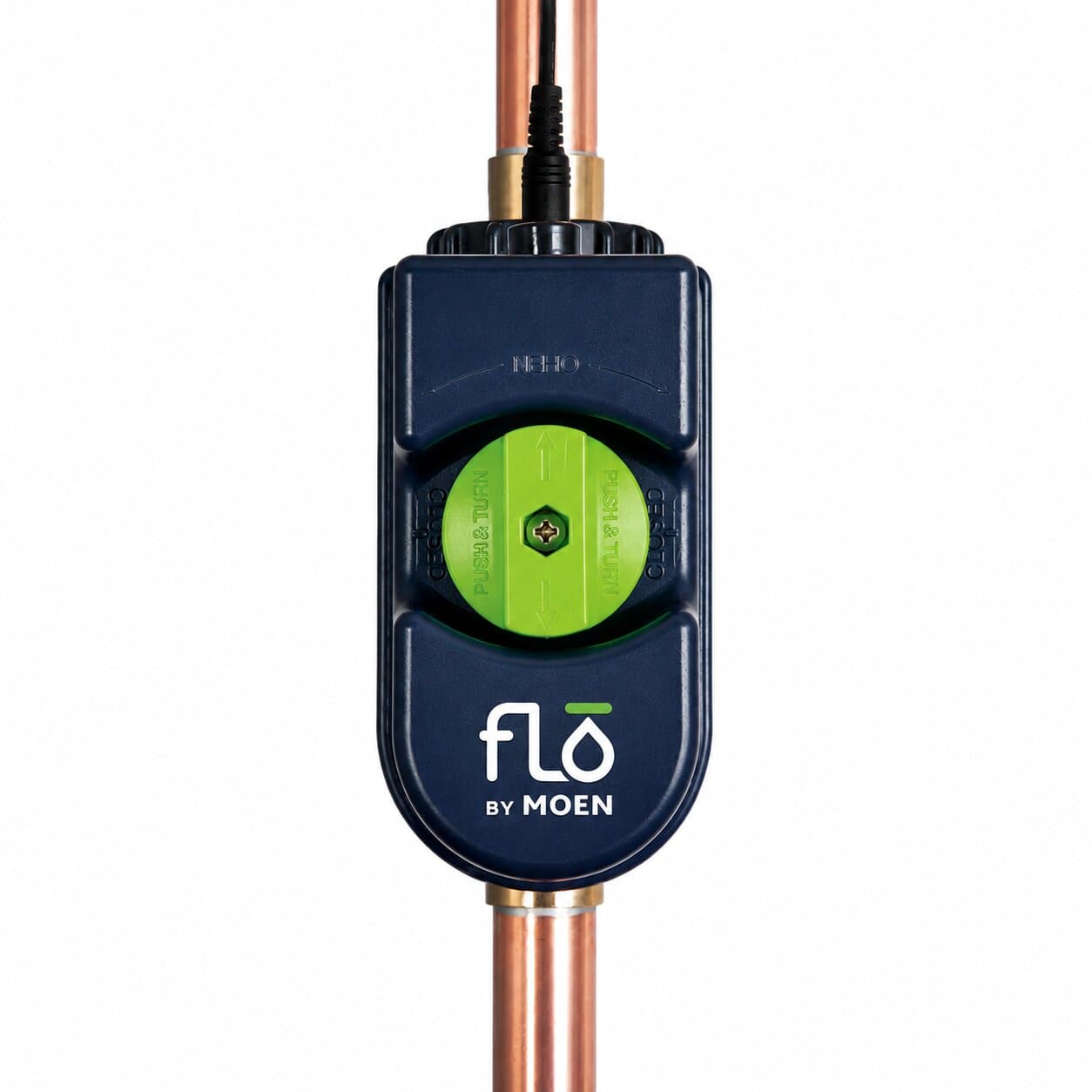
Moen Flo Smart Water Monitor & Shutoff
In 2026, the Moen Flo serves as the "action layer" for any Matter-compatible ecosystem. A Thread sensor from Eve, a WiFi sensor from Govee, or a LoRa sensor from YoLink can all trigger this valve to close.
- Matter-ready firmware update (2026)
- Triggers from any Matter sensor in ecosystem
- Detects leaks as small as a drop per minute
- MicroLeak detection via pressure analysis
- 24/7 cloud + local fallback operation
- Liberty Mutual policyholder savings (Moen initiative, 2025)
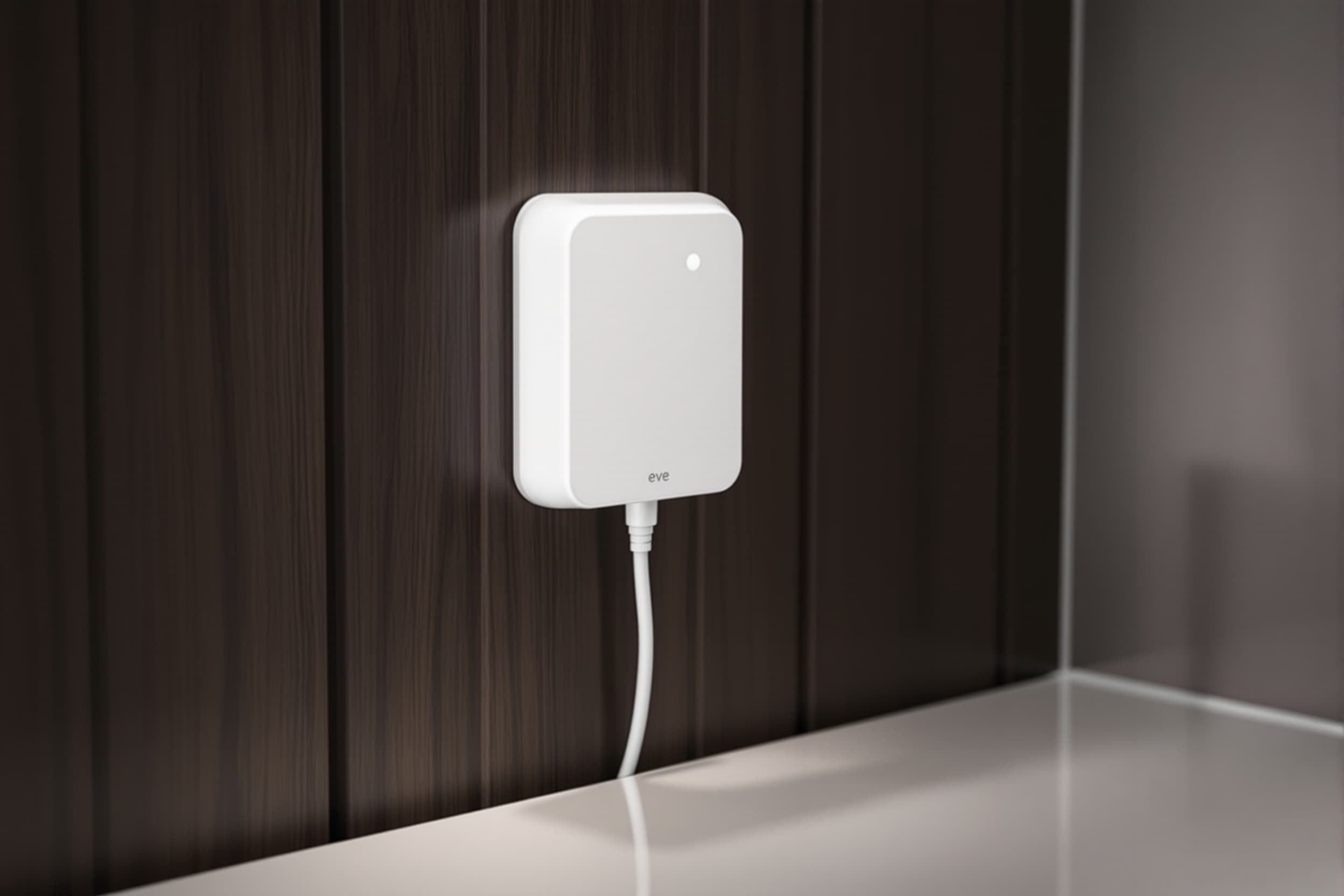
Eve Water Guard (2nd Gen)
Every Eve Water Guard (2nd Gen) extends your Thread mesh network. The more you deploy, the stronger and more resilient your entire smart home becomes — including non-water devices.
- Matter-over-Thread native — no hub required
- Acts as Thread Border Router — extends mesh range
- Full-length sensing cable for perimeter coverage
- 100% Local Area Network (LAN) Control
- Zero cloud dependency — works offline
- Apple Home, Google Home, Alexa compatible
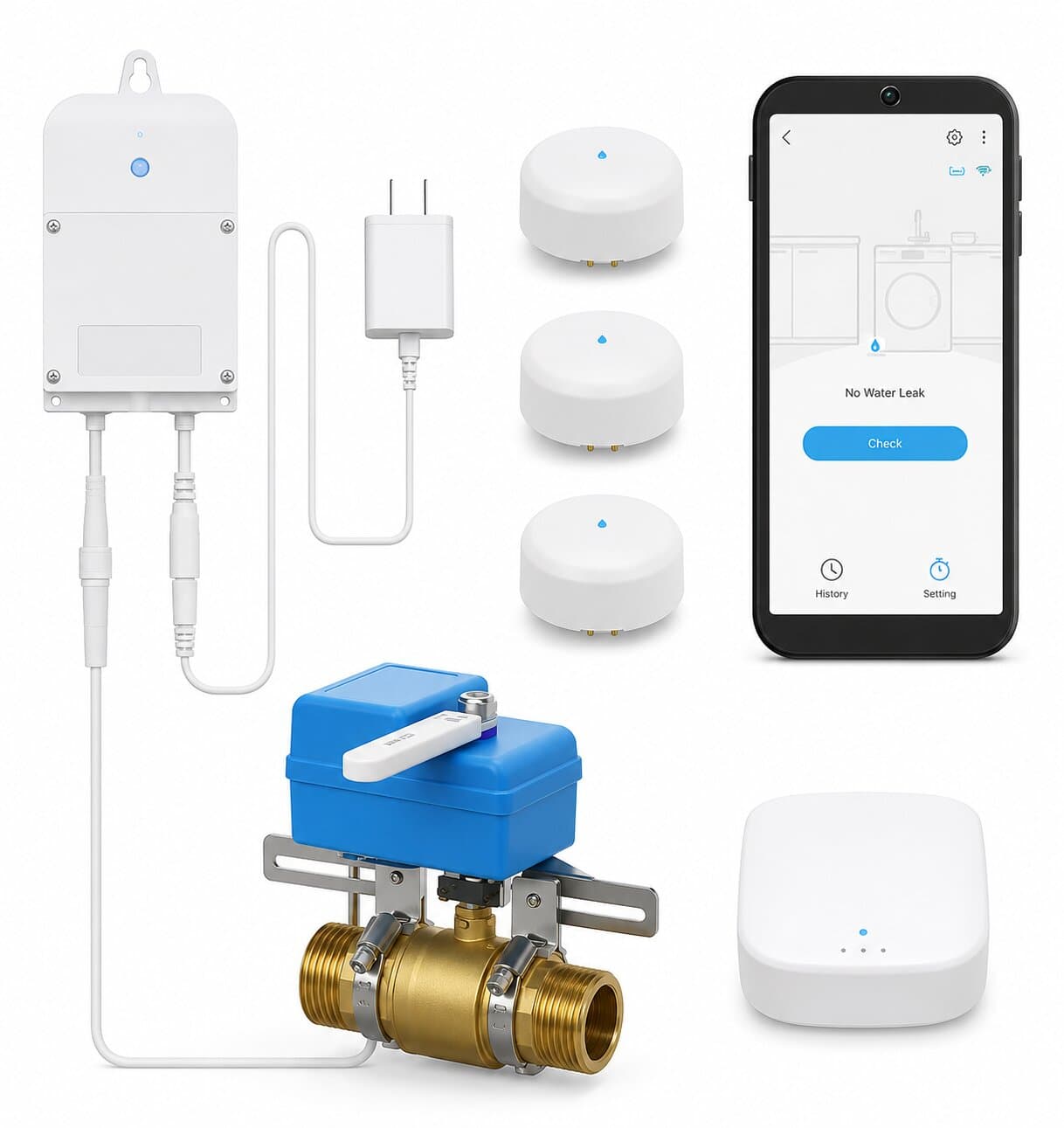
YoLink Smart Water Starter Kit
The YoLink Hub's 2026 Matter Bridge update means these long-range LoRa sensors can now participate in any Matter ecosystem — solving the range problem without sacrificing compatibility.
- LoRa: quarter-mile open-air range
- YoLink Hub now bridges to Matter ecosystem
- Multi-Admin Capability via Matter bridge
- Works in Apple Home, Google Home, Alexa
- 300+ devices per hub
- Dedicated 915MHz band — no WiFi congestion
IKEA Klipbok: The Cost of Covering Every Room
The biggest barrier to whole-home water protection has always been cost. At $40–$60 per sensor, covering 8 appliance zones costs $320–$480 in sensors alone — before the valve.
The IKEA Klipbok changes this calculus entirely. At approximately $40–$60 per sensor, it's a fully Matter-certified, Thread-enabled water leak sensor that integrates natively with Apple Home, Google Home, and Alexa.
Use the IKEA Klipbok for high-frequency, accessible zones (kitchen, bathrooms, laundry). Reserve the Eve Water Guard for water heaters and washing machines where the sensing cable is essential. Pair both with a Moen Flo valve for the complete three-layer defense.
Frequently asked questions
Matter is a universal smart home protocol that allows devices from different brands to communicate directly over your local network without cloud dependency. Water leak detectors and controllable water valves became native Matter device types in Matter 1.3, released May 2024. For water leak detection, this means a sensor from any Matter-certified brand can trigger a Moen Flo shut-off valve — regardless of manufacturer. It also enables Local Area Network (LAN) Control, so your system works even when the internet is down.
Yes, if you're using Thread-based sensors (like the Eve Water Guard 2nd Gen). A Thread Border Router bridges the Thread mesh network to your IP network. It's built into the Apple HomePod mini, Amazon Echo (4th Gen), and Google Nest Hub (2nd Gen). If you already own one of these devices, you already have a Thread Border Router.
Not directly. The YoLink Hub can act as a Matter Bridge, exposing its LoRa sensors to Apple Home, Alexa or Google Home so they can drive automations. The Moen Flo, however, has no native Matter radio — it connects over WiFi to Moen's cloud. Any YoLink-to-Flo automation therefore runs through a cloud integration or a platform routine, not device-to-device over Matter, and it stops working if either service is down. For a fully local chain you need a valve that is itself Matter-native.
Not natively. The Flo has no Matter radio — it connects over 2.4 GHz WiFi to Moen's own cloud, and reaches Apple Home, Alexa and Google Assistant through that cloud rather than through Matter. In practice that means voice control and app routines work, but the link depends on Moen's servers being up, and a local Matter controller cannot talk to the valve directly.
Not on its own. Phyn Plus reaches Apple Home and Samsung SmartThings through a bridge rather than a native Matter radio, and Phyn has not published a dated commitment to native support. Treat any timeline you see quoted elsewhere as speculation.
Multi-Admin Capability allows a single Matter device to be simultaneously controlled by multiple ecosystems — Apple Home, Amazon Alexa, AND Google Home at the same time. You don't have to choose one ecosystem. A Matter-native leak sensor can trigger an Apple Home automation, be controlled by Alexa voice commands and be monitored in Google Home, all from the same physical device. Note that this applies to Matter-certified hardware only: WiFi-and-cloud products such as the Moen Flo and Phyn Plus reach those platforms through bridges instead.
Matter devices with Local Area Network (LAN) Control will continue to function during internet outages. The sensor communicates directly with your Thread Border Router over your local network, which then sends the command to the valve — no cloud server required. This is critical for storm scenarios where a burst pipe and internet outage may occur simultaneously.
Find Your Ecosystem-Compatible System
Use our interactive Diagnostic Hub to filter sensors by ecosystem, placement, and action type — and get a personalized Matter stack recommendation.
Related Research
Sources & References
- 1Connectivity Standards Alliance · May 2024
The release that added water management to Matter: leak detectors, freeze detectors, rain sensors and controllable water valves as native device types.
- 2WiFi, Thread and Zigbee indoor range — industry comparisonsMultiple wireless-protocol comparison sources, cross-checked · accessed 2026
Unlike a manufacturer datasheet, there is no single authoritative figure here — range depends on walls, interference and the specific radio. Published figures for Thread/Zigbee mesh hops cluster around 30-100 ft (10-30m) indoors; WiFi through a few walls is commonly cited near 150 ft. The figures on this site sit inside that published spread. Treat them as a rough expectation, not a specification.
Figures on this page are quoted from the sources above. Where a number is widely repeated online but could not be traced to a primary source, it is not published here. Found something wrong? Tell us and we will correct it.