

Detection vs. Defense:
Underground Leak Detectors
vs. Smart Water Monitors Explained
Two completely different battles. One is about hunting a leak that already exists under your slab. The other is about preventing the next one from destroying your home. Most homeowners confuse these tools — and pay for it.
Locating a leak that already exists under a slab, driveway, or underground pipe. Requires acoustic detection equipment. This is forensic work.
Monitoring your plumbing 24/7 to prevent the next failure from becoming a flood. Requires smart water monitors. This is infrastructure protection.
The Infrastructure Crisis: Two Separate Battles
The US residential plumbing system operates under two distinct threat envelopes. Confusing them leads to buying the wrong equipment, wasting thousands of dollars, and leaving your home unprotected against the specific failure mode you actually face.
Threat Zone 1: Outside the Envelope
Underground and slab leaks occur in the main service line between your water meter and the home's foundation, or in pipes embedded within a concrete slab. These leaks are invisible, silent, and can run for months before any surface evidence appears.
Threat Zone 2: Inside the Envelope
Internal plumbing failures occur within the home's structural envelope — supply lines to appliances, toilet fill valves, water heater connections, and the distribution network behind walls. These are the failures that smart water monitors are engineered to intercept.
The Core Confusion — And Why It's Expensive
A homeowner with a suspected slab leak buys a smart water monitor. It confirms water is flowing when it shouldn't — but it cannot tell them where the leak is. They still need to hire a professional with acoustic equipment. Conversely, a homeowner who buys an acoustic detector to "protect" their home has no defense against a washing machine hose that bursts while they're on vacation. These tools are not interchangeable — they are complementary.
The Active Hunters: Professional Diagnostic Tools
Acoustic detection equipment that listens for pipe vibrations through concrete and soil to pinpoint leak locations without excavation.
Acoustic Sensing Logic: How These Tools "Hear" Through Concrete
When water escapes a pressurized pipe, it creates turbulence at the breach point. This turbulence generates a characteristic vibration — what engineers call an Acoustic Fingerprint — that travels through the pipe wall and into the surrounding medium (soil, concrete, or pavement). The frequency range of this signature is typically 300–3,000 Hz for residential water lines, though this varies by pipe material and water pressure.
Leak Creates Turbulence
Water escaping a pressurized pipe generates vibrations at the breach point — the Acoustic Fingerprint.
Vibration Travels Through Medium
The acoustic signal propagates through pipe walls into surrounding concrete or soil, attenuating with distance.
Probe Captures & Amplifies
A ground contact probe captures the signal. Noise-canceling headphones isolate the leak frequency from ambient noise.
Acoustic Fingerprinting is the process of identifying this unique sound signature and distinguishing it from environmental noise. Professional detectors use digital signal processing to filter out traffic, HVAC systems, and footsteps — leaving only the characteristic hiss of a pressurized water leak. The operator moves the probe in 12-inch increments along the suspected pipe route; the point of maximum signal amplitude is the leak location.

PQWT-L5000 Underground Pipeline Leak Detector
The PQWT-L5000 uses a 16-point acoustic sensing array to triangulate leak locations with surgical precision. Designed for main service lines under driveways, foundations, and landscaping. The multi-point array eliminates the guesswork of single-probe detection — it maps the acoustic field and identifies the peak amplitude point automatically.

VEVOR Pipe Water Leak Detector
The VEVOR offers a multi-sensor approach with a 7-inch touchscreen interface and 4 specialized sensors (horizontal, vertical, medium, and large contact probes). Its digital signal processing filters ambient noise to isolate the specific frequency signature of a water line break — effective for both indoor slab detection and outdoor underground pipe localization.
Complete Acoustic Detection Methodology
Our full guide covers the meter test, isolation method, frequency ranges by pipe material, and the localization technique step-by-step.
The Silent Sentries: Smart Home Protection Systems
Flow and pressure analysis systems that monitor your entire plumbing network 24/7 — and shut off the water automatically when an anomaly is detected.
Flow & Pressure Analysis: The Science of Passive Defense
Smart water monitors operate on a fundamentally different principle than acoustic detectors. Instead of listening for a leak's sound signature, they analyze the hydraulic behavior of your entire plumbing system. Every appliance, fixture, and pipe in your home creates a unique flow and pressure pattern. When a leak occurs, it disrupts this pattern in a measurable way.
Flow Rate Analysis
Devices like the Moen Flo use an Ultrasonic Flow Meter to measure water velocity in real time. A burst pipe creates a flow rate that exceeds any normal household usage pattern. The system compares current flow against a learned baseline and triggers an alert — or automatic shut-off — when the deviation exceeds a threshold.
Pressure Wave Monitoring
The Phyn Plus takes this further with AI-driven pressure wave analysis. Every time a valve opens or closes in your home, it creates a micro pressure wave. Phyn's algorithm has catalogued thousands of these signatures and can identify individual fixtures — and anomalies — with remarkable precision. This is the most advanced passive detection technology available for residential use.

Ultrasonic Flow Meter + MicroLeak Technology. Nightly Health Check at 2:00 AM monitors pressure drops. FloSense AI learns your household's water usage baseline. Automatic shut-off in under 10 seconds.
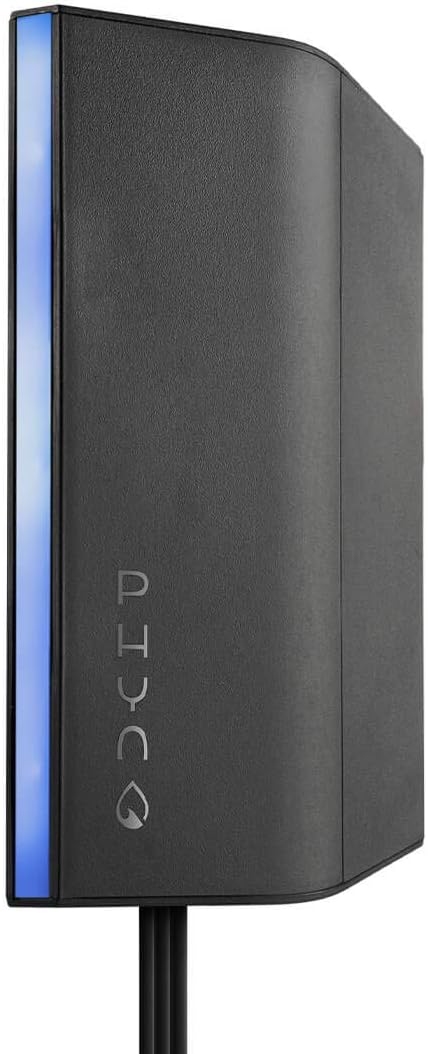
The leader in AI-driven pressure wave monitoring. Phyn's algorithm analyzes micro pressure waves created by every valve opening and closing in your home — identifying individual fixtures and anomalies with precision no other residential device matches.

The only system in this comparison with true DIY installation. Sensors use LoRa Range wireless technology — no WiFi required, 1,000-foot range. Place sensors near appliances without cutting any pipes. Ideal for renters and budget-conscious homeowners.
Why Phyn Plus Leads in AI-Driven Pressure Wave Monitoring
The most technically advanced passive detection system available for residential use.
Every time a valve opens or closes in your home — a toilet flushes, a faucet turns on, a dishwasher starts — it creates a micro pressure wave that travels through your entire plumbing system. The Phyn Plus has catalogued thousands of these signatures across millions of homes.
Its AI algorithm doesn't just detect anomalies — it identifies which fixture is behaving abnormally. A running toilet at 3 AM looks different from a burst pipe. A slow drip behind a wall creates a pressure signature distinct from a washing machine fill cycle. This granularity is what makes Phyn Plus the leader in AI-driven pressure wave monitoring.
The Slab Leak Decision Matrix
A direct comparison of both technology categories across the four criteria that matter most for slab leak scenarios.
| Criteria | Acoustic DetectorsPQWT-L5000 / VEVOR | Smart MonitorsMoen Flo / Phyn Plus | Combined StackBoth Technologies |
|---|---|---|---|
| Detection Depth | Up to 10 ft undergroundConcrete, soil, asphalt | Entire plumbing envelopeCannot pinpoint location | Full coverageLocation + system-wide |
| Real-time Alerts | None — manual operationRequires active scanning | Instant push notificationApp + SMS alerts | Instant alertsSmart monitor handles this |
| Automatic Shut-off | Not availableDetection only, no action | Under 10 secondsMoen Flo & Phyn Plus | Under 10 secondsSmart monitor handles this |
| DIY Difficulty | Moderate2–6 hours, learning curve | Hard (plumber required)Except YoLink X3 | Moderate + Pro installOne-time plumber cost |
| Slab Leak Location | Pinpoint accuracyWithin 12 inches | Confirms leak existsCannot locate under slab | Confirm + LocateFull diagnostic capability |
| Ongoing Protection | None — reactive toolUsed after leak suspected | 24/7 continuousProactive prevention | 24/7 + on-demandBest of both worlds |
DU Tech Team Matrix Verdict
Neither technology category dominates across all criteria. Acoustic detectors win on slab leak localization and detection depth. Smart monitors win on real-time alerts, automatic shut-off, and ongoing protection. The combined stack is the only configuration that achieves full coverage — and for a home with a concrete slab foundation, it's the only configuration we recommend.
Moen Flo vs. YoLink vs. Phyn Plus — Shut-Off Comparison
Detailed head-to-head analysis of automatic shut-off speed, installation requirements, and smart home compatibility across all three systems.
The Integrated Infrastructure Strategy
How to deploy both technology categories as a unified water protection architecture.
Passive Defense (Always On)
Install a smart water monitor on your main supply line. The Moen Flo or Phyn Plus monitors 24/7, learns your usage patterns, and shuts off water automatically on anomaly detection. This is your primary defense against internal plumbing failures.
Point Sensors (High-Risk Zones)
Deploy YoLink X3 sensors near washing machines, water heaters, refrigerators, and under sinks. The LoRa Range wireless protocol ensures sensors work even if WiFi fails. These catch localized failures the main monitor might miss.
Active Hunting (On-Demand)
Keep an acoustic detector available for periodic slab inspections and when your smart monitor flags an anomaly it cannot locate. The PQWT-L5000 or VEVOR turns a $500 professional service call into a 2-hour DIY diagnostic.
Total Investment Breakdown
Frequently Asked Questions
Related Technical Guides
Hidden Leak Detection Guide
The complete acoustic detection methodology — meter test, isolation method, frequency ranges, and localization technique.
Moen Flo vs. YoLink vs. Phyn Plus
Head-to-head comparison of all three smart water monitors — shut-off speed, installation, smart home compatibility, and value.
Zero-Flood Home Strategy
The complete 3-layer water defense architecture — how to combine all these technologies into a unified protection system.
Don't Choose Between Detection and Defense.
Deploy Both.
The PQWT-L5000 finds the leak under your slab. The Moen Flo prevents the next one from flooding your home. Together, they cover every failure mode in the residential water threat matrix.
Affiliate links — we earn a commission at no extra cost to you. Full disclosure